A Data Center Management Game Built Around Operations
Data Center Fan is a free browser management game where you operate the whole room, not just a balance sheet. Plan compute capacity, power and cooling; take SLA-bound work; run live traffic windows; respond to incidents; and grow from improvised garage hardware to a hyperscale facility.
The operating surface is the game.
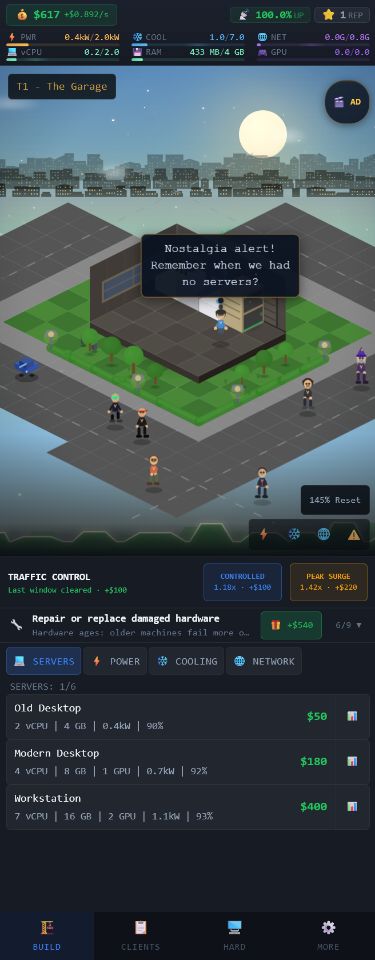
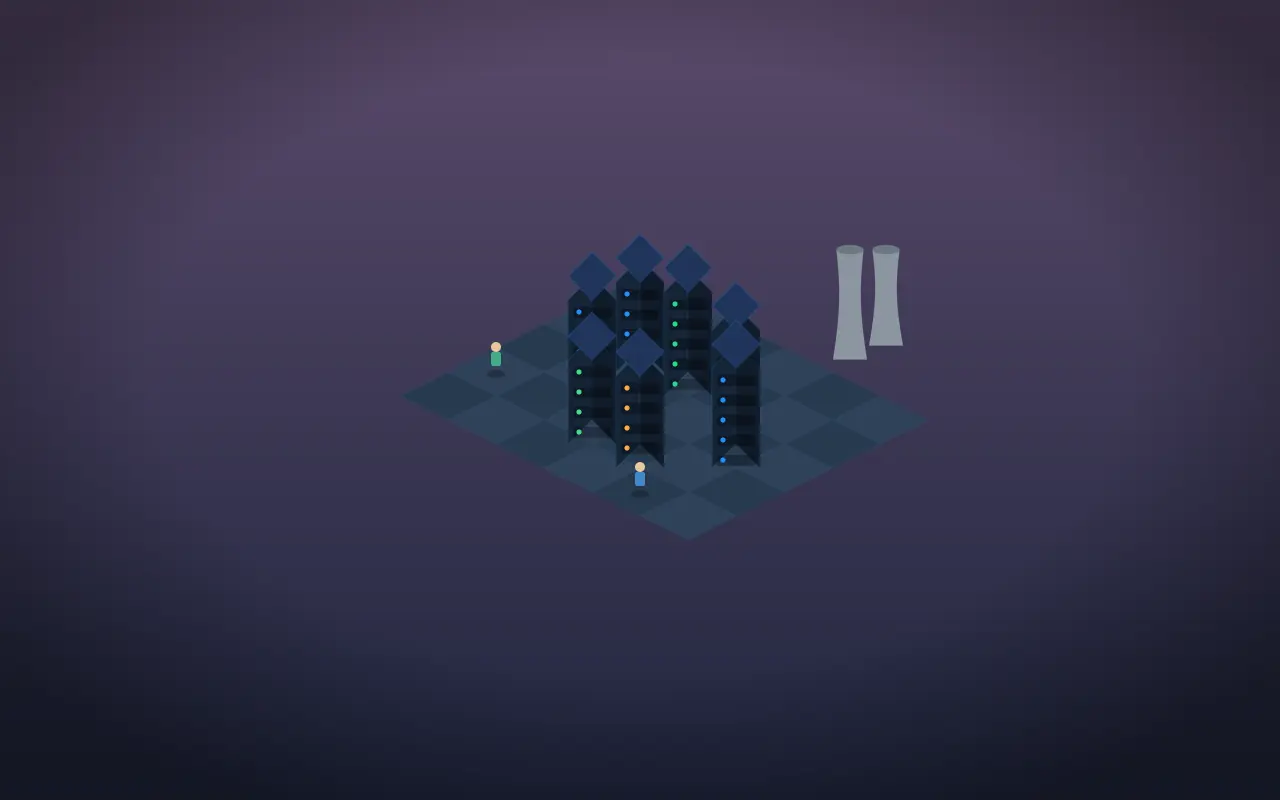
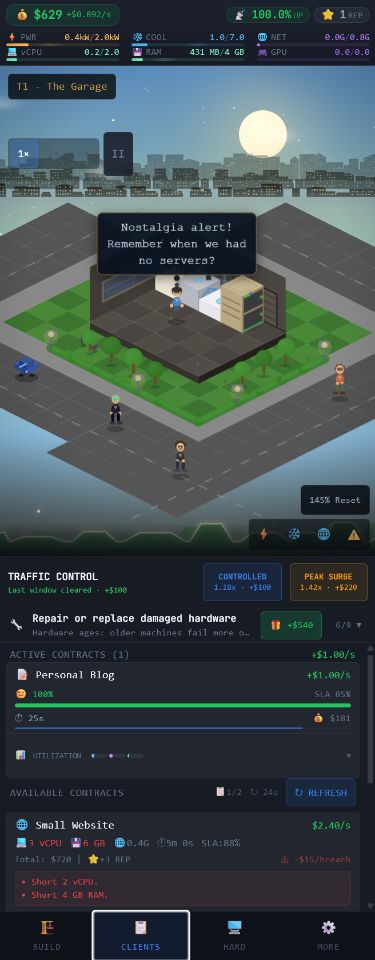
Current responsive gameplay paired with the regional facility scene rendered by the same isometric system.
What kind of game is Data Center Fan?
It is a single-player data center management game with tycoon progression and active operational decisions. You buy and place equipment, earn from client workloads, unlock larger facilities and build a stronger operation over multiple runs. The difference is that growth creates pressure: every new server draws power, produces heat, occupies capacity and gives you more uptime to protect.
The game runs directly in a modern browser. You can start without an account or download, and progress saves locally. An optional account is available for syncing a facility across devices.
The systems you operate
- Compute capacity: match CPU, memory and GPU supply to the workloads you accept.
- Power: install enough electrical capacity for the floor and keep margin for expansion or a demand spike.
- Cooling: remove the heat produced by active hardware before temperature and equipment health become operational problems.
- SLA contracts: choose clients by demand, reward and uptime requirement instead of automatically taking every offer.
- Live load windows: deliberately push controlled or surge traffic for a timed reward, then stabilize the room or throttle the operation.
- Hardware lifecycle: repair, replace and upgrade equipment as it degrades under use.
- People and research: hire specialist staff and unlock improvements that change reliability, efficiency and growth.
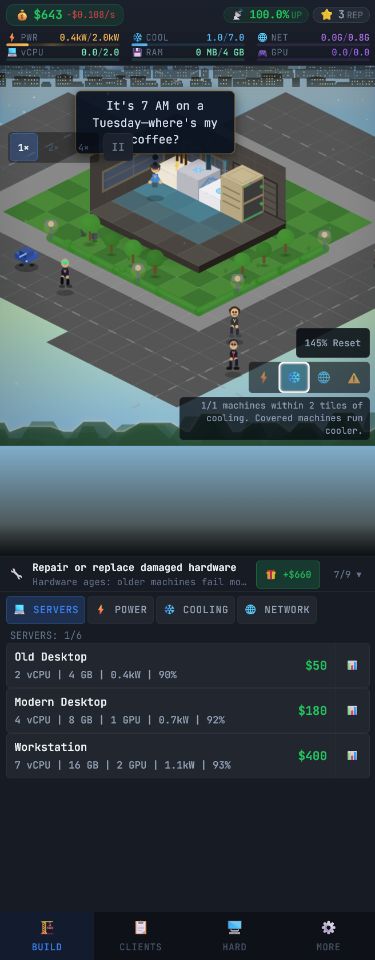
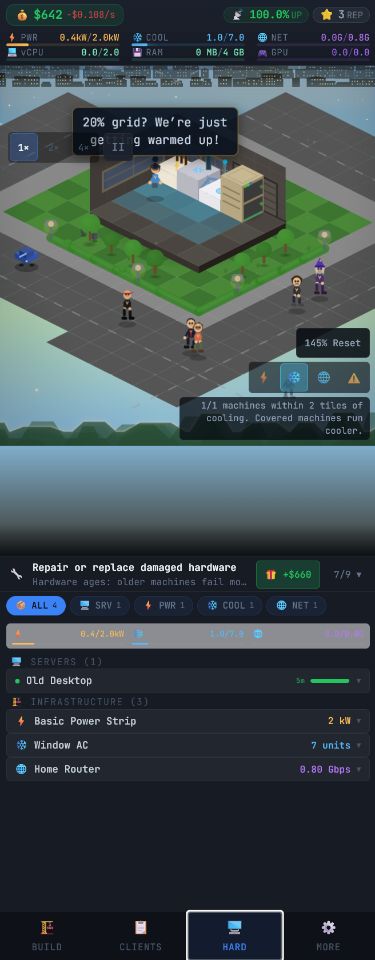
Active play, with idle progress in a supporting role
Offline income helps the facility keep moving, but it is not the main event. An active shift is built around short decisions: inspect headroom, choose a workload, watch demand and uptime, then expand, repair or throttle before a warning becomes an outage.
Controlled load windows reward a stable facility. Surge windows pay more but create sharper demand and a higher uptime target. If the room cannot hold the load, you can throttle the operation, preserve the SLA and take a smaller result. That creates a useful decision now instead of another timer to collect later.
A typical operator shift
- Read the room — Check compute usage, power margin, cooling headroom, hardware health, cash and active contract demand.
- Choose the pressure — Accept an SLA contract, start a controlled load test or take the riskier surge window.
- Watch the signals — Track live demand and uptime while normal failures and incidents can still reach the floor.
- Make the call — Add capacity, repair equipment, hire support or throttle the live operation before the SLA fails.
- Reinvest the result — Use reliable revenue and reputation to unlock better equipment and the next facility tier.
Progression from garage to hyperscale
The first facility is deliberately small: a few slots, weak infrastructure and simple clients. Each tier gives you more room and access to stronger hardware, but also increases the size and cost of the decisions. The progression moves through a basement, office data center, professional facility, regional site, multi-building campus and hyperscale complex.
At the top of a run, an IPO acts as the prestige system. It resets the current facility in exchange for Innovation Points used on permanent advantages. Future runs start stronger, while later environments change cooling economics and the scale of the operation.
Who the game is for
Data Center Fan is for players who like management games where systems interact and where expansion creates new problems to solve. You do not need professional data center knowledge: the interface exposes the important relationships and the operator guide explains the first shift.
It uses the recognizable climate of a working data center - racks, capacity, thermal load, uptime and incidents - as the basis for clear game decisions. It is a game rather than a professional engineering tool, so values and time scales are simplified for playability.
Quick links
Frequently asked questions
Is Data Center Fan a data center simulator?
It is a management game inspired by data center operations, with linked power, cooling, compute, uptime, contracts and equipment-health systems. It simplifies real engineering values and time scales for playability, so it is not a professional design simulator.
Can I play the data center game in a browser?
Yes. Data Center Fan runs free in a modern desktop or mobile browser. No download or account is required to start, and the web build can also be installed as a Progressive Web App.
Is this an idle game?
Offline income supports progression, but active operation is the focus. Live load windows, capacity choices, SLA targets, failures and incidents give an active session immediate decisions and consequences.
Does the game use real data center concepts?
The main relationships come from recognizable operations: compute creates power and cooling demand, equipment degrades, workloads have uptime commitments, and incidents affect the room. The numbers are intentionally compressed into a game-readable model.
Is Data Center Fan free?
Yes. The browser version is free to play, starts without an account, and saves progress automatically on the device.