Hot Aisle, Cold Aisle and Airflow
Cooling is a path: deliver conditioned air to equipment inlets and return hot exhaust without letting the two streams short-circuit.
Learning outcomes
- Orient racks into hot and cold aisles
- Recognize bypass and recirculation
- Explain why containment can reduce fan and cooling work
AIR HEAT REMOVAL
HEAT MOVED ∝ AIRFLOW × TEMPERATURE RISE
Useful airflow passes through IT equipment; bypass air consumes fan energy without cooling a server.
Fronts face fronts, backs face backs
Most rack equipment draws air through the front and exhausts it at the rear. Facing rack fronts across a cold aisle and backs across a hot aisle separates supply from return. Without that discipline, one row can ingest another row’s exhaust.
Orientation is the foundation, not the finish. Gaps, missing blanking panels, open cable cutouts and poorly placed tiles create paths that bypass equipment or bring hot air back to inlets.
Bypass and recirculation waste capacity
Bypass occurs when conditioned air returns to cooling units without passing through IT equipment. Recirculation occurs when hot exhaust reaches an equipment inlet. Both can coexist: the room may have plenty of total airflow while particular racks overheat.
Measure at rack inlets and returns, not only at the room thermostat. Averages hide local hot spots. Pressure, airflow and temperature together explain the path.
Containment completes the separation
Hot-aisle or cold-aisle containment blocks mixing above racks and at row ends. Better separation raises the return-air temperature seen by cooling equipment and can reduce the airflow needed to keep inlets within the selected envelope.
Containment changes fire protection, lighting, access and failure behavior. It should be engineered as a system and monitored after changes.
How it appears in Data Center Fan
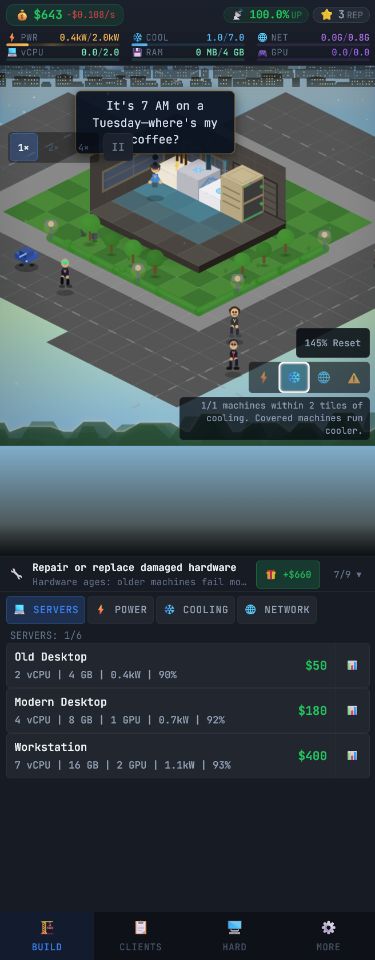
Servers inside a cooling unit’s coverage radius or aligned in a clear aisle shed heat more efficiently. The layout engine only grants bonuses—it never hides a penalty worse than the original baseline.
Common misconception
“A colder room fixes airflow.” Lowering the setpoint may waste energy while the same bypass and recirculation paths keep a local inlet hot.
Knowledge check
What does bypass air do?
- Returns to cooling without passing through IT equipment
- Flows through a server and removes heat
- Feeds a generator radiator
Bypass air consumes cooling and fan capacity but misses the IT load it was meant to serve.